
When does buying pantry staples in bulk make sense?
A bigger bag isn't always a better buy. Here's how to spot pantry staples you'll use, compare the real cost and make room for your haul.
In this guide
Look for a pantry staple you already use often, a lower price per ounce or pound, and enough room to store it. If any of those are missing, that jumbo package might be more of a chore than a deal.
The trick is to check the food, the price and your pantry before you commit. Here's how to give a bulk buy the sharp-eyed test.
Start with what you already use
Your best bulk candidate isn't necessarily the biggest bag on the shelf. It's the food that keeps showing up in your meals. If rice, oats, dried beans or pasta are regulars in your kitchen, they're worth a closer look.
Take a peek at what you have now. Which packages are nearly empty? Which ones have been hanging around because nobody reaches for them? Your pantry can tell you more than a promising package can.
Then think about how long the larger amount would last at your usual pace. Buying ahead can mean fewer shopping trips, but it helps only if the food fits your routine. You don't need to plan a whole new menu around a bag of lentils.
If you're considering a food you haven't tried before, start with an amount you can comfortably use. You can always buy more once you know it's a keeper.
Check the unit price, not the package size
A large package can look like the smart pick. To find out, compare the price per ounce or pound with the smaller package. The unit price gives you a way to compare amounts, rather than guessing from the size of the bag.
Look for the unit price on the shelf label. If you don't see it, divide the package price by the number of ounces or pounds inside. Use the same unit for each option so you're comparing like with like.
Also check what you're comparing. A bag of plain oats and a box of flavored oatmeal aren't quite the same thing. Think about whether you'll use each option in the same way before calling one the better buy.
Finally, look beyond the shelf label. If the bulk option involves a membership, delivery fee or containers you need to buy, include those costs in your decision. A lower unit price is less exciting if getting and storing the food costs more than you expected.
Make room for the haul
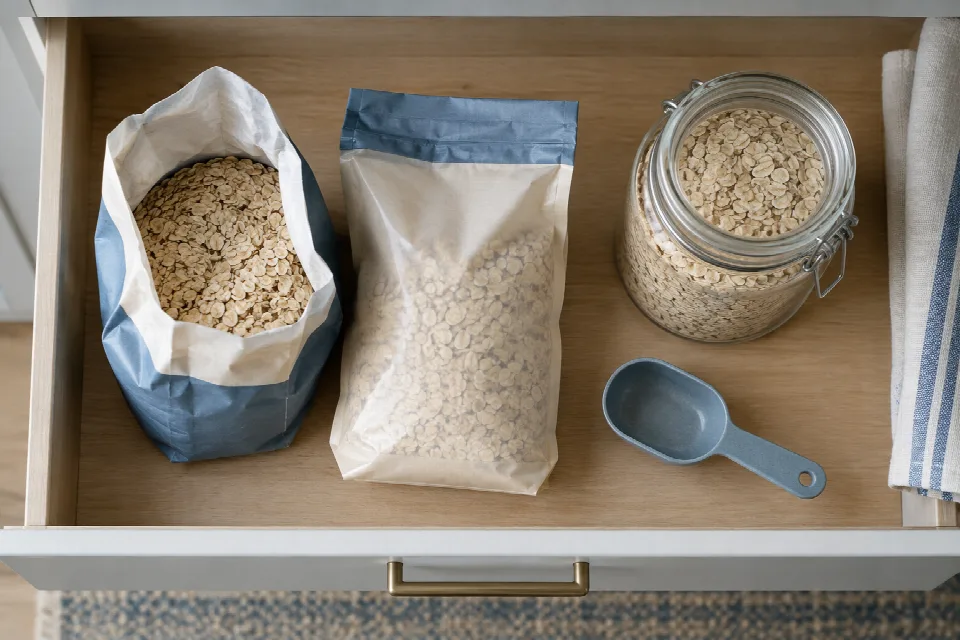
Before a big package comes home, decide where it will live. Pantry staples need a cool, dry place protected from pests. Airtight containers can help you store dry goods after opening.
Check that the package or container will fit and that you can reach it without a pantry puzzle every time you cook. If you split food into containers, keep the package information or label handy so you can identify the contents and check the date.
Already have some of the same food? Put the older supply where you'll reach for it first. That way, your new purchase doesn't hide the food you meant to use.
No useful space? That's a perfectly good reason to pass. A smaller package you can see and use may suit your kitchen better than a larger one tucked out of sight.
Think twice about slow-use staples
Some foods are easy to buy faster than you use them. Ground spices can lose potency over time, while brown rice and whole-wheat flour have shorter shelf lives than some other dry staples. A roomy package isn't much help if the food's quality declines before you finish it.
For anything you use only now and then, ask yourself: How often does this actually go into a meal? If the answer is “not much,” a smaller amount may be the more practical pick, even when the larger one has a lower unit price.
Check the package's storage directions and date before buying, too. Those details can help you decide whether the amount works for your household. Don't count a lower unit price as a win if you expect to toss part of the food.
Try a smaller bulk buy
Bulk doesn't have to mean bringing home the biggest package you can carry. You might choose a medium-sized bag, a few extra cans or an amount from a bulk bin. Compare the unit price first, then pick a quantity that suits your shelf and your cooking habits.
Treat it as a test run. Notice how long it takes to use the food and whether storing it is easy. If you finish it comfortably and the price still makes sense next time, you can consider a larger amount. If not, you've learned something useful without filling your pantry with a food you don't need.
Spot it
- You already use the staple often.
- The unit price beats the smaller option you're considering.
- Any extra fees or storage costs fit your plan.
- You have a cool, dry spot and a way to store the food.
- You expect to use it before its quality declines.
- A smaller bulk amount isn't a better fit for your household.
Sources
- kitchenseer.com · /grocery-staples-worth-buying-bulk
- shop.thedeli.co.za · /blogs/pantry-tips-guides/why-buying-pantry-staples-in-bulk-actually-saves-you-money
- thedollarstretcher.com · /stretch-budget/groceries/foods-worth-buying-in-bulk
- hearthlight.app · /blog/buying-bulk-makes-sense
- canada.ambrosia.ca · /blogs/healthy-habits/is-bulk-buying-really-worth-it
- www.groupon.com · /articles/buying-in-bulk-what-is-worth-it