How to spot a fake sale or inflated original price
A crossed-out price can make a sale look better than it is. Here’s how to check the price history, compare the right item and spot a price spike.
In this guide
Start with the price you’ll pay, not the big number crossed out beside it. Then look for signs that the item actually sold for less: a drop in its price history, a lower price than the same model elsewhere, or a sale that isn’t on repeat.
A sale tag is a clue, not proof. A few quick checks can help you decide whether the price is worth your money—or just worth a second look.
Look past the crossed-out price
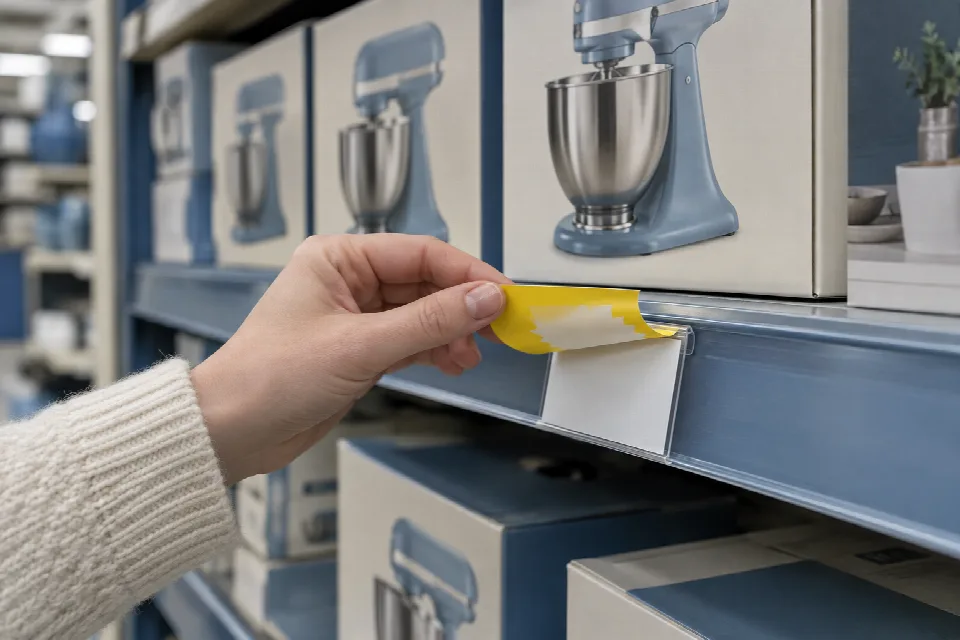
That crossed-out number gives the sale price something to look good against. But it may not tell you what shoppers usually pay. A store might use an old suggested retail price or a higher price that didn’t stick around for long.
Ask yourself: Would the current price still look fair without the crossed-out number? If you don’t know yet, that’s your cue to check. The goal isn’t to prove every sale tag wrong. It’s to find a useful starting point for your decision.
Check the price before the sale
A price history can show whether today’s price is a genuine drop from recent prices. Look at more than the last few days if the information is available. A short spike followed by a drop tells a different story than a price that has fallen from a steady level.
For Amazon listings, tools such as CamelCamelCamel and Keepa offer price charts. Search for the item and look at the line before the sale, not just the lowest point on the screen.
No useful history? Don’t guess. Search the exact item at other stores or make a note of the current price and check again later. A missing chart doesn’t mean a deal is fake; it just leaves you with less to go on.
Match the model at other stores
Copy the model number or SKU into a search. Then compare the listing with other stores and the brand’s site. If the supposed sale price is close to what other sellers normally charge, the big crossed-out number may not mean much.
Make sure you’re comparing the same thing. Check the model number, size, color, capacity and what’s included. Also check whether each item is new, used or refurbished. Two listings that look alike may not offer the same package.
If you find a lower price elsewhere, check that listing just as carefully. A lower number is useful only if it’s for the item and condition you actually want.
Look for repeat sales and price spikes
Some promotions seem to keep coming back, while some prices rise shortly before a sale. In either case, the advertised drop can make the offer look more unusual than it is.
On a price chart, look for the stretch before the spike. If the price was steady, briefly went up and then dropped back to its old level, the sale may not be the bargain the crossed-out number suggests. A price that dips often is worth noting, too: You may be looking at a recurring offer rather than a rare find.
Treat a countdown or a stock warning as a prompt to check, not a reason to skip your checks. If the same message keeps appearing when you return, that’s another reason to focus on the price rather than the pitch.
Check the seller and final cost
Before you choose a listing, check who is selling it. On a marketplace, that may be the store itself or another seller. Look at the seller’s details and the return terms so you know whom you’re buying from and what your options are if the item isn’t right.
Then move far enough through checkout to see the total, without placing the order. Compare the delivered cost, including shipping and tax, with the total at other stores. A lower item price isn’t necessarily the lower final price.
Finally, ask whether you wanted the item before the sale caught your eye. A price can be lower than usual and still not be worth it to you.
Spot it
- Look at the current price without the crossed-out number.
- Check the price history for a real drop or a brief spike.
- Search the exact model and match its condition and contents.
- Notice whether the same sale keeps returning.
- Check the seller, return terms and final delivered cost.
Sources
- www.gobankingrates.com · /saving-money/shopping/retailers-faking-sales-how-catch-them
- www.checkbook.org · /national/sale-fail
- legalclarity.org · /is-it-illegal-to-raise-prices-before-a-sale-ftc-rules
- www.ecfr.gov · /current/title-16/chapter-I/subchapter-B/part-233
- comparemy-cart.com · /blog/how-to-spot-a-fake-deal
- www.cnet.com · /tech/fake-holiday-sales-and-discounts
- www.usatoday.com · /story/money/2025/11/28/how-to-find-real-black-friday-deals-sales/87473434007
- bargainhunteruk.co.uk · /blog/dont-get-played-how-to-spot-fake-discounts-in-seconds