
How to pick LED bulbs that fit your fixtures
A bulb needs more than the right glow. Check its base, shape and fixture requirements before you buy.
In this guide
Start with the fixture, not the bulb box. You’re looking for a base that fits the socket, a shape that fits the space and a bulb that works with the fixture’s electrical setup. Then you can pick the glow you like.
A little detective work can keep you from bringing home a bulb that looks right but won’t fit. Here’s how to check before you shop.
Start with a fixture check
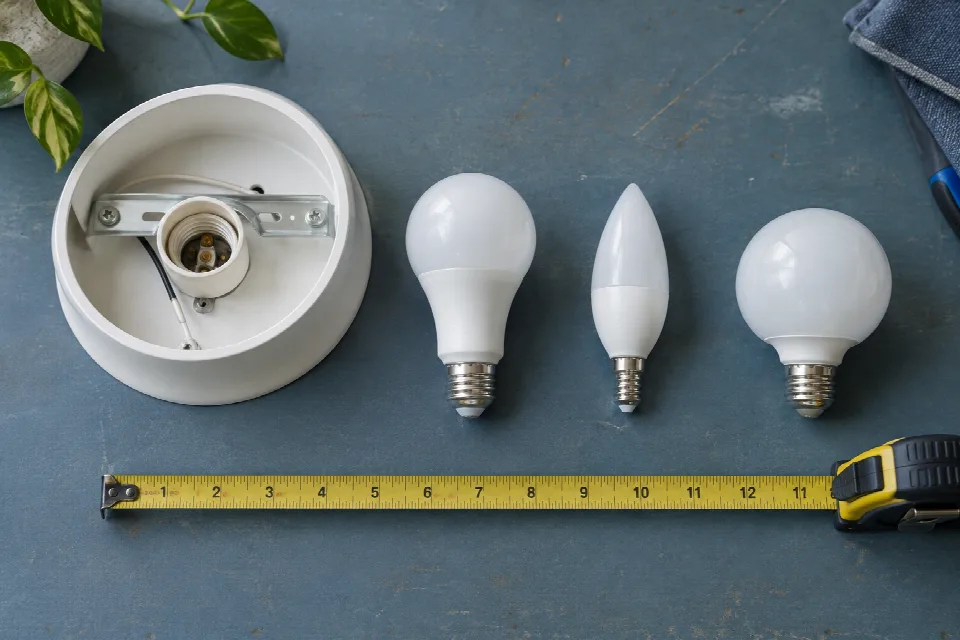
Turn the light off and let the bulb cool before removing it. Look for markings on the old bulb and a label on the fixture. Note the base, bulb shape and fixture’s maximum wattage. If space looks tight, measure it.
Take a photo of the markings or bring the old bulb to the store. It gives you a handy reference when you’re faced with a wall of similar-looking options.
Don’t assume the old bulb tells you everything. Check the fixture label and instructions, too. If you can’t find the information you need, check with the fixture manufacturer before buying.
Match the base to the socket
The base is the part that connects the bulb to the socket. Get this match right first: a bulb that has the brightness and color you want isn’t much use if its base doesn’t fit.
Here are a few base codes you may see:
- E26: A medium screw base used in many standard lamps and fixtures.
- E12: A smaller screw base often used in chandeliers and decorative lights.
- GU10: A twist-lock pin base used for some spotlights.
- G9: A two-pin base used in some compact fixtures.
Match the code on the replacement bulb to the socket’s requirements. These base types aren’t interchangeable, so don’t rely on a quick glance at the bulb’s glass.
Check the bulb’s shape and clearance
The right base is only half the fit test. The bulb itself also needs room inside the shade, globe or recessed housing, without touching the surrounding surfaces.
An A19 is the familiar pear-shaped bulb. B10 and B11 bulbs have candle shapes, while a G25 is a globe. The shape code can help narrow your search, but check the bulb’s listed length and width against the space you measured.
Pay attention to the part of the fixture that closes around the bulb. A replacement that screws in but leaves the globe unable to close hasn’t passed the test.
Pick your brightness and light color
Once you know the bulb will fit, look at lumens to choose brightness. More lumens mean more light. The old incandescent wattage comparison on a package can be a shortcut, but the lumen number helps you compare bulbs directly.
For a rough reference, about 450 lumens is comparable to an old 40-watt incandescent bulb, while about 800 lumens is comparable to a 60-watt one. Around 1,100 lumens compares to 75 watts, and 1,600 lumens to 100 watts.
For light color, check the Kelvin number on the package. Warm white is commonly around 2700–3000K. If you like the light you have now, check the old bulb’s markings and look for a similar number.
Keep brightness and color separate in your search. You can look for the amount of light you want and then choose the color that feels right in the room.
Check dimmers, voltage and enclosed fixtures
Before the bulb makes it into your cart, check a few more details:
- Dimmer: If the light has a dimmer, look for a bulb labeled dimmable and check compatibility with the dimmer.
- Voltage: Match the bulb’s voltage to the fixture. Household voltage is typically 120V, but check rather than guess.
- Enclosed fixture: If the bulb will sit in a sealed fixture, choose one rated for enclosed use.
- Watt limit: Check the bulb’s actual wattage against the fixture’s maximum. Don’t use the incandescent-equivalent number for this check.
The enclosed-fixture check matters because heat can build up around a bulb. If the package or listing doesn’t say whether the bulb is suitable, check the manufacturer’s information.
Size up the deal before you buy
A multipack is only useful if the bulbs work where you need them. Count the fixtures you’re buying for and check whether they all need the same base, shape, brightness and compatibility features.
Compare the cost per bulb as well as the total cost, including any shipping. Look for ENERGY STAR-qualified LEDs when comparing options: they use less power than incandescent or halogen bulbs for the same light output.
Finally, check the return policy before ordering, especially if you’re unsure about clearance or dimmer compatibility. A quick look at the details now can save you a second shopping trip.
Spot it: your bulb-fit checklist
- Match the base code to the socket.
- Check the bulb’s shape, length and width against the available space.
- Choose your lumens and light color.
- Check dimming, voltage, enclosed-fixture rating and actual wattage.
- Compare the cost per bulb, total cost and return policy.
Sources
- hometosight.com · /how-to-know-what-light-bulb-to-use
- goldenlighting.com · /blogs/the-golden-edit/how-to-choose-light-bulbs-2
- maisonvelume.com · /blogs/lighting-library/how-to-choose-light-bulbs
- www.whatwatt.com · /led-base-types-explained
- www.superbrightleds.com · /blog/understanding-light-bulb-base-types-screw-bases.html
- jqzlighting.com · /blogs/news/led-lamp-light-bulb-buying-guide
- www.energy.gov · /femp/purchasing-energy-efficient-light-bulbs
- www.energy.gov · /cmei/femp/purchasing-energy-efficient-light-bulbs