
Fresh vs. frozen produce: which fits your shopping habits?
Fresh, frozen or a bit of both? Match your produce to your meals, your budget and the time you have to cook.
In this guide
Start with what you’ll actually eat. If you have plans for a crisp salad, fresh greens may be your pick. If you want spinach ready for a soup whenever you get around to making it, a frozen bag might fit better.
Then check the details: how much you’ll use, what’s in the package and how much prep you want to do. The best choice isn’t always the one with the lowest shelf price. It’s the one that makes sense for your meals.
Match produce to your meals and shopping habits
Think about your next few meals before you reach for a bag or bunch. Are you cooking a planned dinner, tossing together lunches or keeping options open for a busy week?
Fresh produce can be a good fit when you have a recipe in mind or want to eat something soon. Picture sliced peppers for lunches, berries for breakfast or tomatoes for a sandwich.
Frozen produce can fit a more flexible plan. You might keep peas for fried rice, spinach for soup or berries for smoothies. If you cook for one or your plans change often, taking out the amount you need can be handy.
No need to pick a permanent team. Your shopping habits may change from week to week, and your produce choices can change with them.
Compare the cost of what you’ll use
A bigger package isn’t automatically a better buy. Start by comparing the price and unit price of similar fresh and frozen items. Prices vary by product and store, so check the choices in front of you rather than assuming one form always wins.
Next, ask how much of each you expect to eat. A fresh bunch is less appealing as a deal if you only have a plan for half of it. A frozen bag may look convenient, but it isn’t a bargain for you if it takes up freezer space and never makes it into a meal.
For a more useful comparison, divide the package price by the number of portions you expect to use. Keep the portions roughly the same size. Include anything you know you’ll trim or leave behind in your estimate.
Also check what you’re buying. Plain frozen vegetables and a frozen side dish with sauce may serve different purposes in your kitchen. If you want plain produce, scan the ingredient list before you compare.
Weigh nutrition and storage
Frozen doesn’t automatically mean less nutritious. In a study comparing selected fresh, refrigerated and frozen fruits and vegetables, most comparisons showed no significant differences in the nutrients tested. Results varied by food and nutrient.
Fresh produce can lose nutrients during storage, so the fresh item you eat later in the week may differ from one eaten sooner. The practical takeaway: both forms can have a place in your meals.
For storage, look at the space you have before you shop. A freezer full of bags leaves little room for anything else. A crowded fridge can make it hard to spot the produce you meant to use.
Check package storage and cooking instructions, too. If you’re unsure how a frozen item is meant to be prepared, don’t guess based on what you’d do with its fresh counterpart.
Pick the prep and texture you prefer
Consider what you want on the plate. If a fresh crunch is the point of your snack or salad, shop with that in mind. For a blended soup or smoothie, you may care more about flavor and convenience than the shape of each piece.
Prep matters, too. Look at the form in the package: whole, sliced, chopped or mixed. Would you rather do the cutting yourself, or have the pieces ready for your recipe? Check whether the package calls for extra steps before serving.
Not sure what you’ll like? Try one item in a meal you already make. Compare it with your usual choice for taste, texture, cost and effort. Your own dinner is a useful test.
Build a fresh and frozen mix
A simple starting plan: choose fresh produce for meals you’ve already planned, then add a few frozen options for meals you can make when plans change.
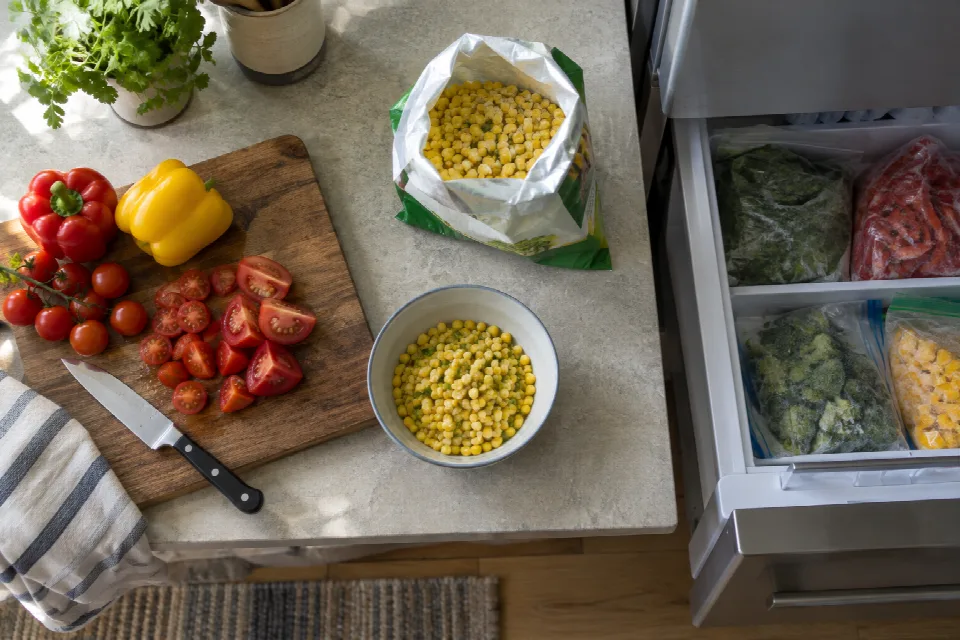
For example, you might buy fresh peppers for lunches and frozen corn for a quick rice bowl. Or pick fresh fruit for snacking and frozen berries for smoothies. Choose combinations you’ll actually use, not ones that only sound good in the store.
Before your next trip, peek in the fridge and freezer. What did you finish? What’s still waiting? Let that guide your list. A small adjustment to what you buy can be easier than building a whole new meal plan.
Spot it checklist
- Name a meal or snack for each item before you buy it.
- Compare unit prices and estimate the portions you’ll use.
- Check ingredients if you want plain produce.
- Make sure you have room to store your picks.
- Read package storage and cooking instructions.
- Choose the texture and prep that suit your meal.
Sources
- www.sciencedirect.com · /science/article/abs/pii/S0889157517300418
- www.healthline.com · /nutrition/fresh-vs-frozen-fruit-and-vegetables
- nutrifytracker.com · /blog/fresh-vs-frozen-vegetables
- www.nationalgeographic.com · /health/article/frozen-fruits-vegetables-produce
- www.verywellhealth.com · /fresh-vs-frozen-vegetables-11812366
- www.thegrocer.co.uk · /news/families-could-save-1300-a-year-by-choosing-frozen-fruit-and-veg/724665.article
- ardo.com · /en/stories/frozen-vs-fresh-smarter-choice-healthy-affordable-eating
- ers.usda.gov · /data-products/charts-of-note/chart-detail
- cropcartmarkets.com · /articles/are-farmers-markets-cheaper-than-grocery-stores